

PART FOUR: THE GRADUAL OPENING
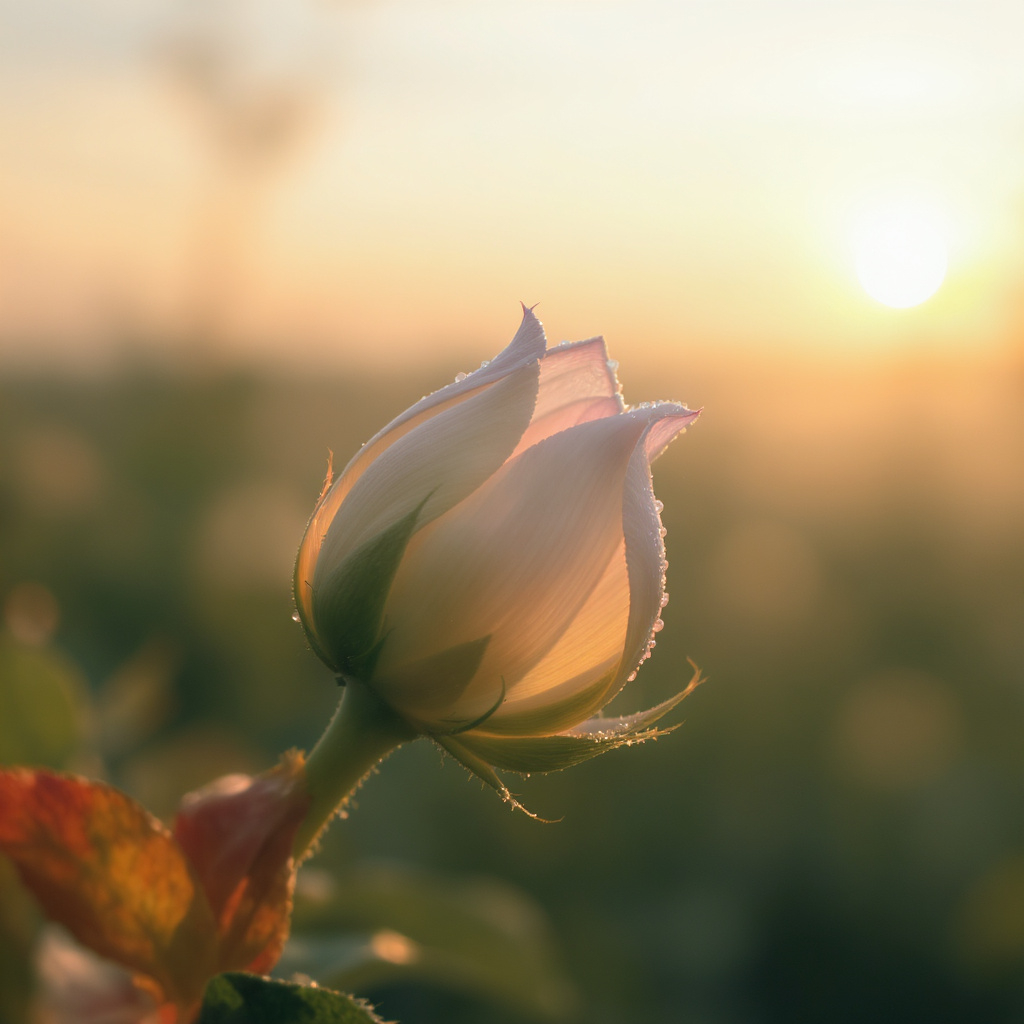
A flower does not bloom by force. You cannot pry open the petals and call it blossoming. The opening happens in its own time, when the conditions are right: enough sunlight, enough water, enough warmth. And then one morning, what was closed is open, and it seems like the most natural thing in the world.
Healing the nervous system follows this same organic rhythm. We cannot demand that our bodies trust again, that our hearts unclench, that decades of protective tension release on command. But we can tend the conditions. We can offer sunlight and water. And in time, something that seemed impossible begins to happen on its own.
The Nervous System Can Change
One of the most important discoveries of modern neuroscience is something that ancient practitioners always intuited: the brain and nervous system are not fixed. They are constantly reshaping themselves in response to experience. Scientists call this neuroplasticity, the capacity of neural pathways to change and reorganize throughout our lives.
This means that the patterns your nervous system learned in the past are not permanent sentences. The hypervigilance, the hair-trigger startle response, the tendency to freeze or flee, these were adaptations to circumstances that may no longer exist. And just as your nervous system learned these patterns, it can learn new ones.
Every time you practice settling your body, every time you take a conscious breath that activates your calming response, every time you notice rising anxiety and meet it with a grounding exercise instead of panic, you are teaching your nervous system something new. You are laying down new neural pathways, strengthening the circuits of regulation and safety. The change may be imperceptible in any single moment, but it accumulates. Drop by drop, the stone is shaped by water.
Research confirms what practitioners experience. A growing body of research suggests that regular mindfulness practice can change the structure of the brain, increasing gray matter in regions responsible for emotional regulation, reducing activity in fear centers, and strengthening connections between the thinking brain and the emotional brain. The nervous system that once hijacked you with panic can become a nervous system that knows how to return to calm.
This is not wishful thinking. It is biology unfolding in its own timing. And it is available to you.
Widening the Window
Remember the window of tolerance, that zone in which you can experience life without becoming overwhelmed? Through patient practice, this window can widen.
What does this mean in practical terms? It implies that sensations which once triggered panic may begin to feel merely uncomfortable. Situations that once pushed you into shutdown may become challenging but manageable. The gap between stimulus and response grows larger; where once you were instantly flooded, now you have a moment to choose. And in that moment of choice, everything changes.
Widening the window does not mean you will never be triggered again. It does not mean you will float through life in perpetual serenity. You are a human being with a human nervous system, and you will still have hard days. But the hard days become less frequent, less intense, and shorter in duration. You recover more quickly. You trust yourself more.
This widening happens gradually, almost invisibly. You may not notice it until one day you find yourself in a situation that would have undone you a year ago, and you realize you are okay. Your heart might be beating a little faster, your breath might be a little shallow, but you are still here, still present, still able to think and choose. That moment of recognition-“I am handling this“-is one of the quiet miracles of healing.
The Accumulation of Small Victories
We live in a culture that celebrates dramatic transformation, the sudden breakthrough, the complete reversal, the moment when everything changes. And such moments do occur. But more often, healing happens through the accumulation of small victories that barely register as victories at all.
Today, you noticed your shoulders were tight and consciously relaxed them. That is a victory.
Yesterday, you felt anxiety rising and took three slow breaths before it escalated. That is a victory.
Last week, you chose to take a walk when you felt overwhelmed instead of numbing out. That is a victory.
These small moments may seem insignificant. But each one is a rep in the gym of your nervous system, building the strength that will eventually allow you to lift what once would have crushed you. Each one is a message to your body: We have tools. We can handle this. We are learning.
I encourage you to notice these moments. Perhaps even keep a simple record of them, not as a way of measuring progress or creating pressure, but as a way of honoring what is actually happening. The mind tends to focus on what is still difficult, on how far there is still to go. The small victories can slip by unacknowledged. But they are the substance of your transformation. They are the drops of water shaping the stone.
And sometimes, when you look back over weeks or months, you will see that the person you are now could not have been imagined by the person you were then. The change crept up on you, so gradual it was invisible from day to day, but real, and lasting, and yours.
The Rhythm of Practice
Healing is not linear. There will be days when practice feels effortless, when your body seems to settle of its own accord, when presence comes as naturally as breathing. And there will be days when everything feels stuck, when old patterns reassert themselves, when you wonder if you have made any progress at all.
Both kinds of days are part of the path. The setbacks are not failures; they are information. They show you where the nervous system is still tender, where more patience is needed, where an old wound has not yet fully healed. If you can meet these difficult days with curiosity rather than judgment, they become teachers rather than enemies.
The rhythm of practice is not unlike the rhythm of nature. There are seasons of growth and seasons of rest, times of flowering and times of lying fallow. Winter is not a failure of the earth. It is part of the cycle that makes spring possible. Your own winters, the hard stretches, the plateaus, the times when nothing seems to be happening, are also part of your unfolding.
Trust the rhythm. Keep practicing, even when it does not feel like anything is changing. The seeds you plant in winter will bloom when the time is right.
The Gift of Co-Regulation
We are social creatures. Our nervous systems developed not in isolation but in relationship, constantly attuning to others around us. A baby learns to regulate not through solo effort but through the calming presence of a caregiver. When the parent is settled, the child settles. When the parent is anxious, the child absorbs that anxiety. This is the dance of co-regulation, and it continues throughout our lives.
For healing, this has profound implications. While developing your own capacity for self-regulation is essential, you do not have to do it alone. In fact, trying to heal in complete isolation can be unnecessarily complicated. The nervous system often learns faster and feels safer in the presence of others whose nervous systems are more regulated.
This is one reason why practicing with a skilled teacher matters, especially in the early stages of healing. A good teacher carries a quality of presence that your nervous system can attune to. Their calm becomes a reference point, a reminder that calm is possible. Their steadiness becomes a kind of tether, keeping you from drifting too far into dysregulation.
The same is true of practicing in community. When you sit or move alongside others who are also cultivating presence, a collective field supports your individual practice. You borrow from each other’s regulation. You are held by something larger than yourself.
And beyond formal practice settings, you can seek co-regulation in your relationships and daily life. Notice which people in your life have a settling effect on you, whose presence makes you feel more grounded, more at ease. Spend time with them. Let their nervous systems remind yours what is possible. This is not weakness or dependency; it is the wisdom of our social nature.
In time, as your own capacity for self-regulation deepens, you may find that you become a regulating presence for others. The calm you have cultivated begins to radiate outward. This is one of the quiet gifts of practice; not only do you heal yourself, but you become a source of healing for those around you.
Releasing What Was Held
As the nervous system learns to feel safe, something else begins to happen: the body starts to release what it has been holding.
Trauma is sometimes described as energy that never got to complete its natural cycle. When we face a threat, our bodies mobilize tremendous resources to fight or flee. But if that response is thwarted, if we cannot escape, if we must freeze and endure, the mobilized energy has nowhere to go. It becomes trapped in the tissues, stored in the muscles and organs, waiting for a completion that never came.
Through gentle practice, we give this energy permission to move. It may manifest as trembling or shaking during or after practice. It may emerge as waves of heat, as spontaneous tears, as deep sighs or yawns. It may come as vivid memories or emotions that seem to arise from nowhere. These are signs of discharge, of the body finally releasing what it has carried for years or decades.
If this happens to you, try not to be alarmed. Try not to interpret, analyze, or make it mean anything about your progress. Simply allow it. The body knows what it is doing. Your task is to stay present, to breathe, to ground yourself, and to let the wave pass through.
Not everyone experiences dramatic releases, and the absence of such experiences does not mean you are not healing. The nervous system has its own intelligence, its own timing, its own way of integrating what was fragmented. Some healing is visible; much is invisible. Trust the process.
When Stillness Becomes Safe
Earlier, we spoke of stillness as a potential trigger for those with trauma, the body associating immobility with danger, with being trapped, with the frozen helplessness of overwhelming experience. For many people, this is why traditional seated meditation feels so threatening.
But here is the beautiful paradox: as you practice movement and breath, as you regulate your nervous system and widen your window of tolerance, stillness begins to transform. What once felt like a cage begins to feel like a resting place. What once triggered panic begins to invite peace.
This happens gradually, without forcing. You may find that after a period of Qigong movement, you naturally want to stand or sit quietly for a moment to absorb the practice’s effects. That moment of stillness feels earned, feels safe, feels nourishing. You are not being told to sit still; you are choosing it because your body wants it.
Over time, these moments of stillness can lengthen. The nervous system learns that immobility does not equal danger, that stillness can coexist with safety, with aliveness, with the freedom to move whenever you choose. This is what Dr. Stephen Porges calls “immobilization without fear”, the state in which we can truly rest.
And here something extraordinary emerges: the distinction between movement and stillness begins to soften. In your stillness, you sense the subtle internal movement of breath and energy. In your movement, you carry an inner core of stillness, an unwavering presence that moves through the forms. Stillness in motion, motion in stillness. This is the integration that QigongDharma points toward, not the triumph of one over the other, but their marriage, their dance.
When you reach this place, and you will reach it, in your own time, you may look back and marvel at how far you have come. The stillness that once terrified you has become a friend. The body that once felt like enemy territory has become home. And you will know, in a way that no one can take from you, that healing is real.
Patience as Practice
All of this takes time. There is no shortcut, no hack, no way to accelerate the organic unfolding of your nervous system’s healing. This may be frustrating to hear in a culture that promises quick fixes and instant transformation. But there is also a freedom in accepting it.
When you release the demand for rapid progress, you can be present to what is actually happening right now. You can appreciate today’s practice for its own sake, not merely as a means to some future goal. You can stop measuring yourself against an imagined timeline and simply be where you are.
Patience itself becomes a practice. Each time you feel the urge to rush, to force, to judge your progress as too slow, and gently choose instead to continue with kindness, you are practicing. You are teaching your nervous system that it does not have to perform, that it is not being evaluated, that there is no danger in taking all the time it needs.
The Daoist tradition speaks of the watercourse way: how water does not fight against obstacles but flows around them, finding the path of least resistance and always moving toward the sea. Your healing can have this quality. Not forcing, not fighting, but flowing and trusting that the current knows the way, even when you cannot see the destination.
The journey of a thousand miles begins beneath your feet. You are already walking. Every step counts.